
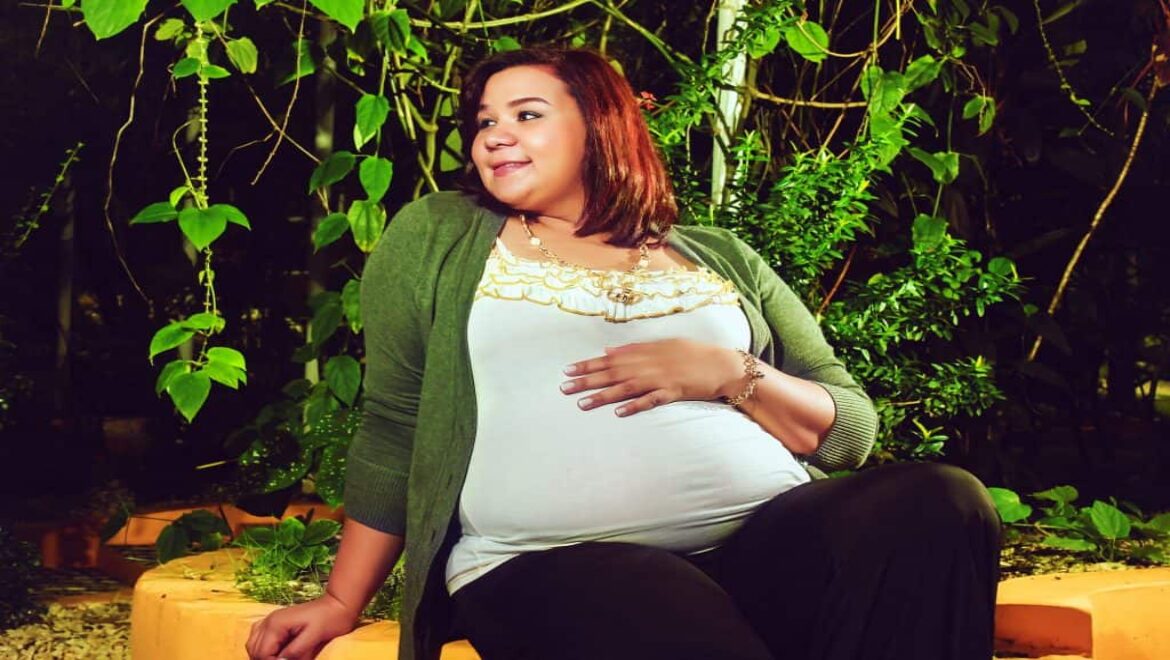
Finding out you’re pregnant is a wonderful thing, but it’s also a time of worry.
This worry can be heightened if you’re overweight.
There are certain situations in pregnancy and birth which can cause more concern if you are overweight and some complications which can be more likely to arise.
We’re going to talk about six things that you need to be aware of when you’re overweight and pregnant. Not to scare or worry you but just to give you a heads up.
If you want to lose some weight
First off if you can lose weight before you are planning to become pregnant, then that is the ideal situation.
Having said that, it is totally possible to lose weight whilst you are pregnant too.
It can be difficult to eat healthily if you’re feeling very sick or nauseous, but by eating a diet consisting of mainly unprocessed foods (meat, fish, eggs, nuts, seeds, fruits, vegetables, full fat dairy, olive oil and whole grains) and having regular gentle exercise you can lower your BMI to a healthier range.
This will reduce the risks of problems during birth.
The best way to do this is to speak to a dietitian or nutritionist. They will be able to help you determine what foods you can eat in pregnancy and the foods you should avoid.
In addition, a dietitian will also be able to help you draw up a healthy eating plan, and show you exercises that you can do safely in pregnancy.
Don’t Be Tempted to Eat for Two
The old ‘eating for two’ adage is certainly not true, and whilst you do need to give your baby the nourishment that he or she needs, you should do this via unprocessed nutrition-packed foods, and not foods which are highly processed and full of empty calories (e.g. sugar and products made from white flour).
Now we know about general health with weight and pregnancy, let’s talk about six things to consider when you’re overweight and about to give birth.
1.Higher Risk of Gestational Diabetes
When a woman is overweight and pregnant, there is a raised chance of developing a condition called gestational diabetes (GD).
This is a form of diabetes which only occurs during pregnancy, and in some cases this can continue on after delivery as Type 2 diabetes.
There is a high risk to the baby when a woman develops gestational diabetes if it goes untreated and unmonitored. And for that reason, when you book in with your midwife or see your doctor you are weighed and you’ll be referred for a GD test to see whether you have the condition.
There will also be regular checks throughout pregnancy as gestational diabetes can come on at any time.
Be aware of this, and don’t be alarmed. It’s simply a monitoring method to ensure that if you do develop the condition, it can be caught and treated in time.
2. Higher Risk of a C Section, Induction or Instrumental Delivery
A woman who is overweight is at a higher risk of needing a C section at delivery, either planned or emergency.
She is also at a higher risk of needing help during delivery, such as with a ventouse or forceps (called an instrumental delivery).
Plus there are increased risks for early induction as well.
These types of deliveries are typically a little more complicated and have more general risks involved.
By speaking to your midwife or OB/GYN you can understand more about what may happen if you do need to have this type of delivery.
It is also very likely that you will need to give birth in a hospital, because of the possible need of assistance during delivery.
If you are really set on a home delivery, you will need to discuss this carefully with your midwife or doctor, voice your wishes, but also listen to the medical advice you are given.
Whether you are able to attempt a home birth will depend on your BMI (body mass index), and any other risk factors.
3. Increased Risk of Infection After C-section
If you choose to have a c-section or you end up having to have one, the risk of your wound becoming infected is greater.
You’ll need to take extra care to keep it clean and dry.
4. A Higher Chance of a Heavy Baby
If you’re overweight you have an increased risk of delivering a baby who is 4kg or more.
This weight is considered heavy, and as a result, there is a higher chance of that C section or instrumental delivery we were just talking about.
Again, it is something to be aware of, and the weight and size of your baby will be monitored throughout your pregnancy.
If your baby is shown to be growing large and heavy, this will also increase the chances of you needing to give birth in a hospital.
5. An Increased Risk of Bleeding After Delivery
A high BMI (Body Mass Index) increases the risk of bleeding occurring after delivery, something which is called postpartum hemorrhage (PPH).
There is also a higher chance of a blood clot, either during pregnancy or at delivery.
Again, your risks and health will be monitored as you go along, and it’s about listening to advice, and trying to lose a little weight during your pregnancy if at all possible.
If you can do this, your risk factors for all of the above will be greatly reduced, especially the risk of bleeding.
Whilst PPH is a relatively common condition overall, it is a serious consideration and shouldn’t be taken lightly.
There is also a higher chance of developing pre-eclampsia, which is a potentially life-threatening condition when it isn’t treated.
For this reason, having regular blood pressure checks is vital, because this will identify the condition ahead of time and allow it to be treated accordingly.
6. You Will Need to Have a Consultation With an Anesthetist
During your pregnancy, you will probably be booked in for an appointment with an anesthetist to discuss pain relief.
Again, this is all linked to the possibility of needing help during delivery, and in that case you may need an epidural.
Your anesthetist will weigh up the pros and cons, and the risk versus benefit.
Positive News
A recent study showed that if you’re otherwise healthy, the risks of pregnancy and birth for overweight women are much lower than previously believed.
“The Oxford University researchers point out that, among healthy women with a straightforward pregnancy, childbirth risks are influenced more by whether someone is a first-time mum than whether they are obese.
They found that the chances of first-time mums of normal weight having medical interventions or complications during childbirth are greater than for ‘very obese’ but otherwise healthy women having a second or subsequent child.”
These are six things for you to be aware of during your pregnancy and delivery if you are currently overweight.
None of this is designed to scare you in any way, it’s more about being aware and having all the facts to hand.
If you can reduce your weight, in turn you will greatly reduce your chances of any complications from occurring.
Sources:
- https://www.ncbi.nlm.nih.gov/pmc/articles/PMC3289484/
- https://www.ncbi.nlm.nih.gov/pubmed/21860284
- https://www.theguardian.com/lifeandstyle/2016/mar/15/overweight-mothers-obese-pregnancy-larger-babies-blood-sugar-high-blood-pressure-smaller
- https://www.ncbi.nlm.nih.gov/pmc/articles/PMC2858205/
- https://www.ncbi.nlm.nih.gov/pmc/articles/PMC4603577/
- https://www.bmj.com/content/341/bmj.c3428
- https://www.babycenter.com/404_are-c-sections-more-complicated-for-plus-size-women_1512497.bc
- http://www.ox.ac.uk/news/2013-09-11-childbirth-risks-not-same-all-obese-women